
A tool to benchmark your MS clinical standards
MS is a complex, lifelong condition that demands timely, coordinated care. Recognizing the need for consistent, high-quality standards, an international panel of MS experts reached a consensus on standards for brain-health-focused care in MS: the MS Brain Health standards.1
Based on these internationally agreed standards, the process of developing the MS Brain Health quality improvement (QI) tool began. The tool aims to support MS centres in tracking and refining the timing of key events in the MS care pathway and to facilitate consistent practice evaluation and improvement.
Agreed via an evidence-based modified Delphi process, the MS Brain Health standards and associated QI tool define core, achievable, and aspirational time frames for key interventions. These standards provide MS centres with a framework to benchmark their current performance and identify areas for improvement. The tool provides a vehicle for centres to record their current practices, assess them and re-audit to measure progress.
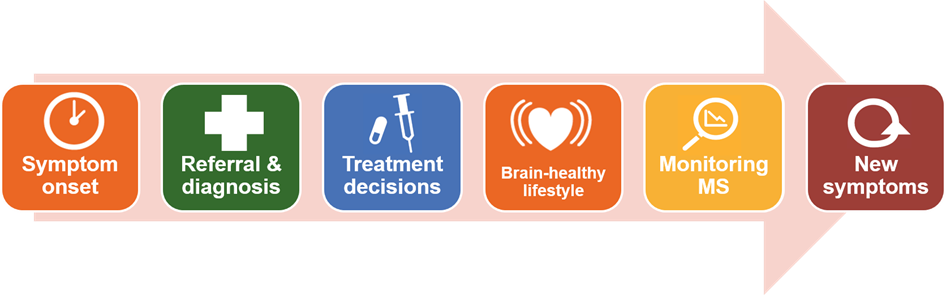
The following areas of MS care are covered in the QI tool
Developing a tool to support clinical improvement
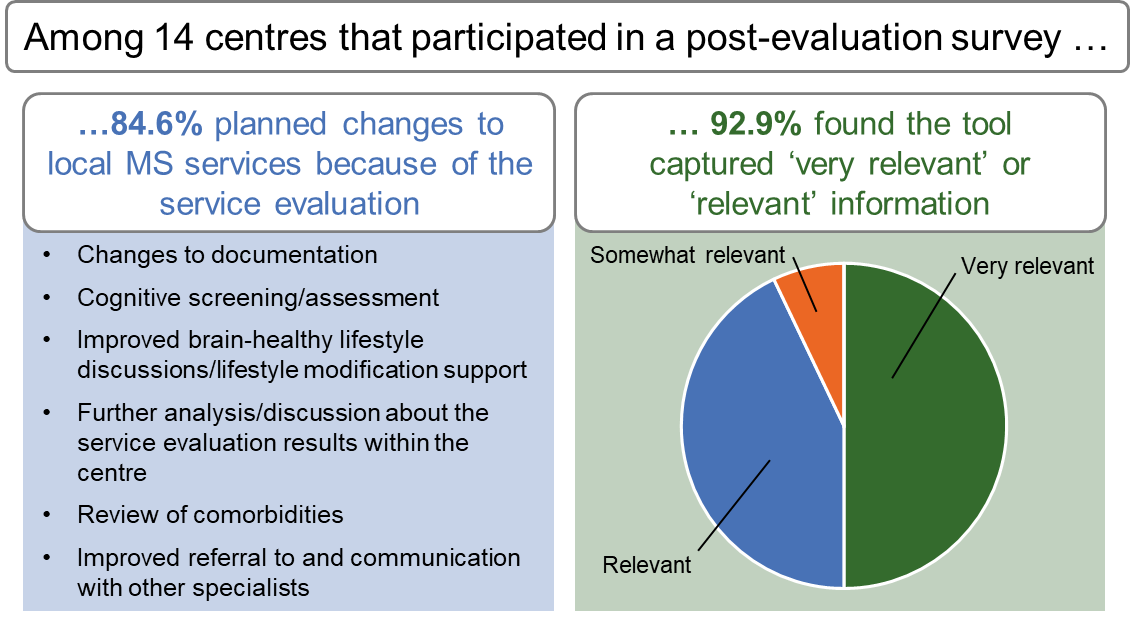
During 2021, 17 MS centres from 14 countries trialled the MS Brain Health QI tool (in Excel format) to explore its usefulness for service improvement in various healthcare settings. Insights from the pilot results led to tangible improvements in clinical practice at many participating centres.2
More than 84% of participating centres made service changes, such as improving documentation and streamlining referral processes. Feedback from these pilot sites has informed ongoing refinements, which will be incorporated into a more user-friendly and concise version of the QI tool that is now planned.
International reach of QI improvement tool

Countries shown in blue took part in the pilot study
As the tool continues to develop, it has the potential to further enhance MS services worldwide by enabling clinicians to intervene sooner, monitor care more effectively and provide timely education to people living with MS and their families.
Looking forward: future directions
In 2026, we anticipate work will begin to develop this prototype into a web-based offering that can support routine clinical practice. We hope that the next iteration of the tool will be used by MS centres globally to help to improve health outcomes for people with MS.

- Hobart J et al. Mult Scler J. 2019;25(13):1809–18. doi:10.1177/1352458518809326.
- Hobart J et al. Mult Scler J Exp Transl Clin. 2022;8(3):20552173221124023. doi:10.1177/20552173221124023.